
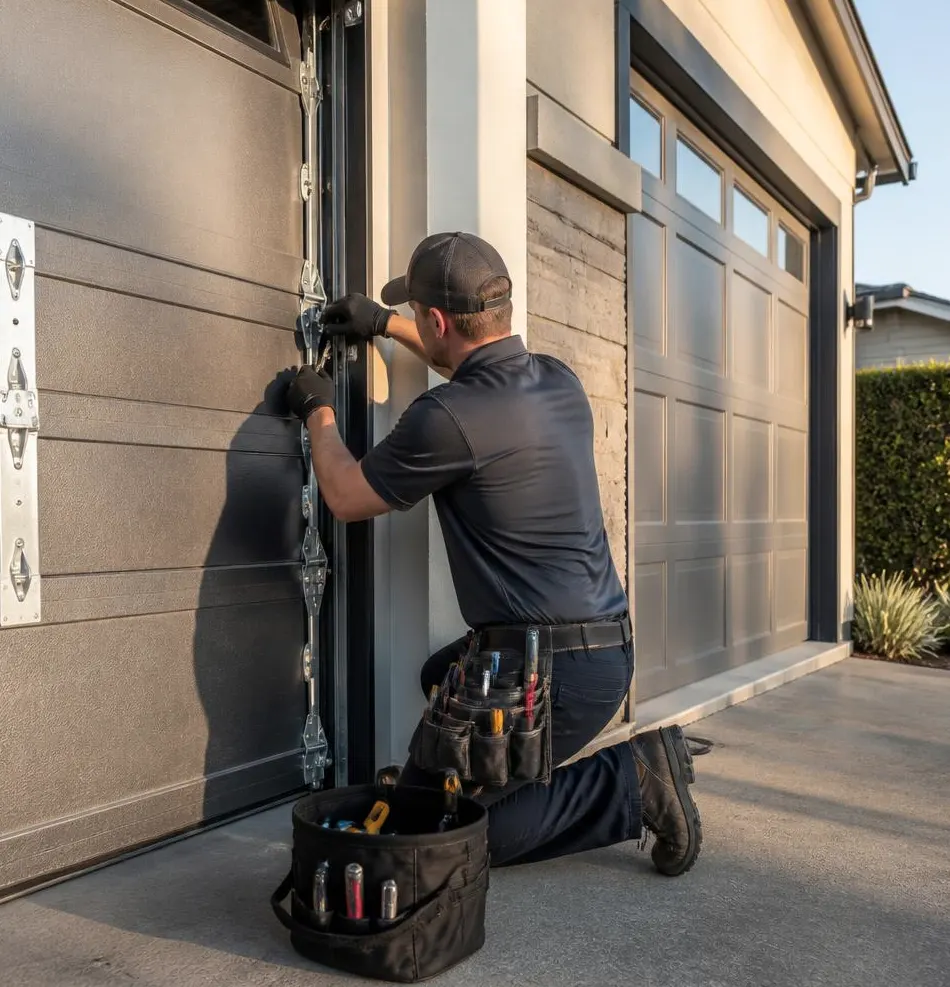
The Mistake Most People Make First
When the garage door stops responding, the first move for most homeowners is to tear open the remote, swap the battery, and maybe order a replacement remote online. It feels like the obvious fix: batteries are cheap, swapping them takes thirty seconds, and it doesn't require admitting the problem might be bigger than a $4 part. But if the wall button also fails to do anything, the remote was probably never the issue. A dead remote battery only explains the remote. It doesn't explain why pressing the button mounted right next to your kitchen door does nothing either. When both inputs are ignored, the problem lives in the opener itself, the power feeding it, or something blocking its logic from acting on any command.
What This Usually Looks Like
- Press the remote or wall button and get total silence — no light, no motor hum, nothing.
- The opener's light blinks a set number of times (a built-in error code on many models) but the door never moves.
- The unit works sometimes, especially after you jiggle the wall console wires or wait a few minutes.
- The light on the opener comes on, but the motor doesn't engage.
Each of these points to a different stage in the system, which is why a technician works through them in a specific order rather than guessing.
1. Power to the Opener
Before touching anything electronic, check whether the unit is actually getting power. Garage outlets are frequently on a GFCI circuit, and those trip easily — especially after a damp morning or when the garage has had any moisture intrusion during the rainy months that start ramping up this time of year. Look for a tripped outlet near the opener or a tripped breaker in the panel. A fully dead opener with no light at all is often this simple.
2. Safety Sensor Alignment and Obstructions
If the opener has power but still ignores commands, the next and most common culprit is the pair of photo-eye sensors mounted a few inches off the floor on either side of the track. These sensors exist to stop the door from closing on something, but if they're misaligned, dirty, or blocked, many openers refuse to respond to any command, not just closing. After a dry summer and the dust and wildfire smoke residue that tends to settle in open garages, it's common for these lenses to get a fine film on them that throws off the sensor's reading. A technician checks for:
- A solid versus blinking LED on each sensor — blinking usually means misalignment.
- Cobwebs, dust, or a stray box in the sensor's line of sight.
- Brackets that have been bumped or shifted, which is common if a bike, trash can, or parked car has nudged them.
The fix here is usually just cleaning the lenses and re-aiming the sensors so both lights read solid. It takes minutes and costs nothing once you know where to look.
3. Wall Button Wiring
If sensors check out, the wiring running from the wall console back to the opener head is next. This is low-voltage wire, often stapled along the ceiling or wall, and it's vulnerable to a few things: it gets pinched during other garage work, chewed by rodents looking for a nesting spot, or simply corrodes at the connection terminals over years of temperature swings between hot summer days and cool, damp winter mornings. A short or break in this wire can disable response to both the wall button and, depending on the model, the whole receiver. A technician tests continuity along the run and inspects the terminal screws at the opener head, which loosen more than people expect from normal vibration.
4. Interference or a Weak Antenna
Garage door openers receive signal through a small antenna that hangs from the unit. If it's been pushed up and tucked out of the way (often during a light bulb change or other maintenance), range drops sharply. Newer homes also tend to have more wireless devices nearby — routers, smart home hubs, solar inverters — and some can sit close enough in frequency to cause intermittent interference. This usually shows up as a remote that works from six feet away but not from the driveway, rather than total non-response, but it's worth ruling out before moving to more involved repairs.
5. The Logic Board or Receiver
If power is fine, sensors are aligned, wiring tests clean, and the antenna is intact, the circuit board itself is the remaining suspect. Boards fail for a few predictable reasons: age (most openers run ten to fifteen years before components start going), power surges from storms, or sustained exposure to temperature and humidity swings common in garages that aren't climate controlled. A technician will often try a learn-button reset first, since that resolves some soft failures, but a board that's truly failed usually needs to be replaced — either on its own or as part of a new opener, depending on the age and condition of the unit.
When to Call Los Altos Garage Door
If you've checked the breaker, cleaned the sensors, and the opener still won't respond to either input, it's time to bring in a technician rather than keep guessing. Los Altos Garage Door's Garage Door Opener Repair & Installation service covers exactly this kind of diagnostic work: testing power delivery, sensor alignment, wiring continuity, and the logic board in sequence, then recommending a repair or a replacement opener based on the unit's age and condition rather than defaulting to the most expensive fix. If the door is stuck in a position that's unsafe or blocking your only way in or out of the garage, our Emergency Garage Door Service can get a technician out quickly rather than leaving you to troubleshoot a dead opener on your own.
If your garage door in Los Altos, CA is ignoring both the remote and the wall button, give Los Altos Garage Door a call. We'll find the actual cause and get it working right the first time.