
What Waiting Another Season Actually Costs
Skip garage door storm prep this fall and the bill usually shows up in one of two ways: a door that buckles or blows inward during a wind event, or slow water intrusion that warps framing, ruins stored belongings, and invites mold over the winter. Neither is cheap to fix after the fact. A damaged panel or bent track often means a full section replacement rather than a simple repair, and water damage to drywall, insulation, or flooring inside the garage can run well into four figures depending on the extent. Compare that to an afternoon of inspection and a few low-cost fixes now, and the math is not close.
Why the Garage Door Is Your Home's Weakest Wall
Every other exterior wall in a typical house is a continuous, fastened structure. The garage door is not. It is a large panel of thin steel or wood, held in place by rollers riding in tracks, hinges, and a spring system doing most of the structural work. That design makes it the single biggest opening in most homes' exterior envelope, and it is built to move, not to resist lateral pressure the way a stud wall does.
When wind hits a closed garage door, it does not just push against it, it can get underneath and behind it if there is any gap, creating uplift and pressure that the track and rollers were never meant to absorb. Older doors without reinforcement, or doors with worn rollers and loose track brackets, are especially vulnerable. If the garage door fails during a storm, wind pressure can transfer into the rest of the house through the newly open garage, putting stress on the roof structure from the inside. This is part of why building codes in high-wind regions now require wind-rated garage doors for new construction, even though many existing homes still have older, unrated doors in place.
What Winter Brings to This Area
Local winters mean a shift from dry, dusty months to wind-driven rain, sometimes arriving in sharp bursts after a long dry season. Dust and debris that built up over summer can clog tracks and weep holes right before the first real storm, and homes with earthquake retrofits or older foundations may have slight shifts in the garage opening that only become obvious when wind and rain hit at the same time. None of this requires alarm, but it does mean this is the right week to walk out and actually look at the door, not just open and close it from inside the car.
A Practical Pre-Storm Checklist
- Weatherstripping: Check the rubber seal along the bottom and sides. Cracked, flattened, or missing weatherstripping is the most common entry point for wind-driven rain and should be replaced before the first storm, not after.
- Track alignment: Stand back and look at both tracks. They should be parallel and firmly bolted. Gaps between the track and the wall, or visible bending, mean the door is not seated as tightly as it should be under pressure.
- Rollers and hinges: Worn or rusted rollers let the door rattle in its tracks during gusts, which accelerates wear on everything else. Lubricate hinges and rollers with a silicone-based garage door lubricant, not household oil, which attracts dust.
- Panel condition: Look for dents, rust spots, or delamination, especially near the bottom panel where splash-back and standing water do the most damage over time.
- Reinforcement struts: Horizontal struts bolted to the back of the top panels stiffen the door against wind load. If your door does not have them and you are in a wind-exposed spot, this is worth asking about.
- Opener and backup power: A battery backup for the opener means the door can still operate during a storm-related power outage, which matters if you need to get a car out in a hurry.
- Drainage around the slab: Clear leaves and dust out of any drain or slope leading away from the garage opening so water does not pool against the door during heavy rain.
The Trade-Off Worth Knowing
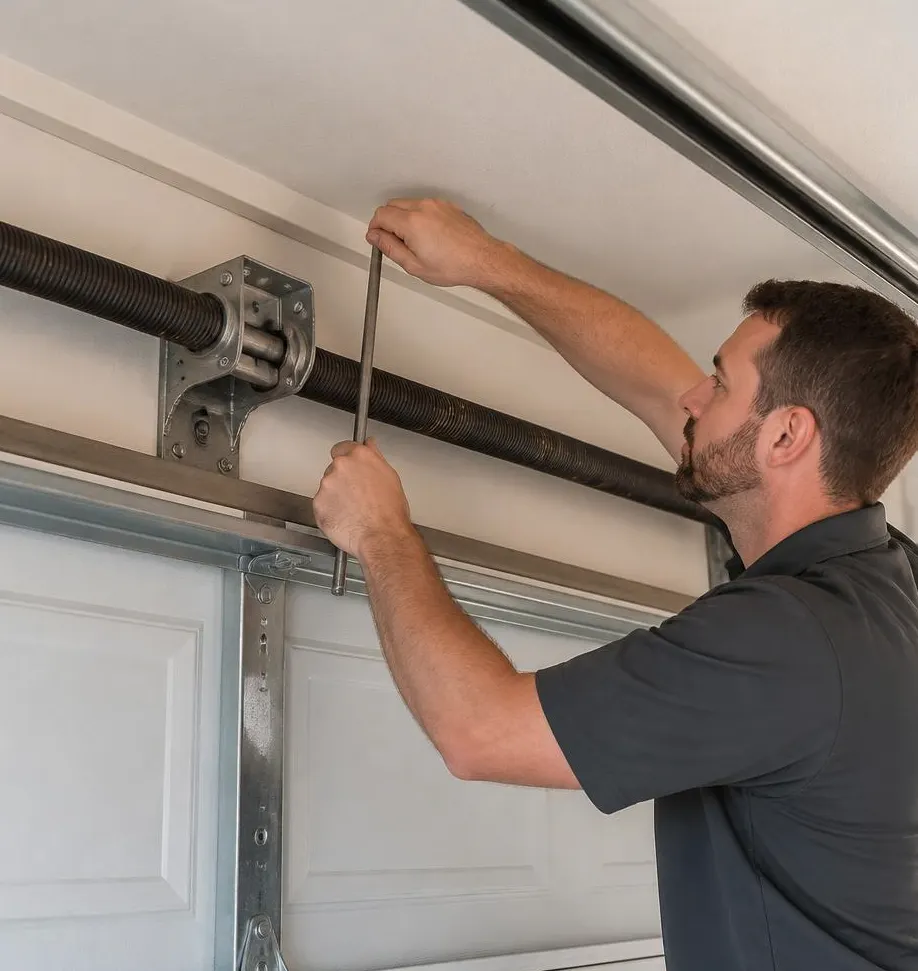
Weatherstripping and lubrication are cheap, fast fixes anyone can do in under an hour. Reinforcement struts, track realignment, and spring adjustments are not jobs to improvise, since a misjudged spring adjustment can cause serious injury and a poorly aligned track can let the door jump its rollers entirely. Know which category your fix falls into before you start.
When to Call Los Altos Garage Door
If your inspection turns up bent tracks, a door that shudders in gusts, rollers that look rounded or cracked, or weatherstripping too far gone to patch, it is time for a professional look before the rain picks up. Los Altos Garage Door's maintenance service covers a full track, roller, spring tension, and weatherstripping check, and catches small issues before a storm turns them into a failed door. If something fails overnight during a storm, their emergency garage door service is built for exactly that, getting a technician out to secure or repair the door quickly rather than leaving your home exposed until regular business hours.
Get ahead of this season's storms. Call Los Altos Garage Door today to schedule a pre-winter inspection or ask about emergency service for homes in Los Altos, CA.